|
|
According
to the
Center for Disease Control,
some viruses and bacteria can live from 20 minutes up to 2
hours or more on surfaces like cafeteria tables,
doorknobs, desks, and etc.
|
|
One
of the most alarming trends in recent years is the rising numbers
of people who don't practice good hand washing to stop the spread of germs. If fact most of us think the worst thing that can happen if we don't
wash our hands is that we might catch a cold. "Well so what," we
say, "I'll just catch it eventually. Besides the more germs you're
exposed to...the stronger your immune system will be." |
Well, this
might be true as far as it goes... But it completely misses the
rest of the story: some of those germs out there can kill you!
This is something most people in America and other countries with good
health care have forgotten about. But 100 years ago the flu
(influenza) was spoken of with terror. Millions of people the
world over died from it.
Other disease
epidemics like
small pox,
whooping cough,
polio,
and
measles
also caused widespread death and suffering -- especially among small
children and the elderly (like grandparents). In fact if you lived
back then, you would have known it was very common to have a brother or
sister die from one of these diseases.
| So why don't we
see as many kids dying from these diseases now? Two reasons:
immunizations (those shots you get from the doctor) and better
hygiene. Hygiene means keeping things clean and free
of germs. |
Nowadays we
know that we must:
-
be
careful to wash after changing diapers and using the toilet,
-
wash before eating or
preparing food
-
wash after handling
animals
-
cover our nose and mouth
with a tissue when we sneeze or cough,
-
avoid sharing
another person's drinking cup or utensil (forks, etc.)
-
and to keep
our water sources clean -- away from sewage, garbage dumps, and
cemeteries.
Doing all
these things has helped stomp out much of the disease that used to cause
so much sickness and death. And this is great!
| But the problem
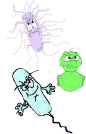
is, now people forget about how powerful and dangerous germs can
be. Or...they think these diseases don't even exist
anymore. But
this is not true.
|
We still have
to watch out for the germs that cause
meningitis,
bronchiolitis,
influenza,
hepatitis A, and
various types of
infectious diarrhea.
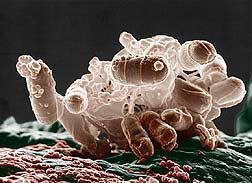
In addition there are the germs like
salmonella
and
E. Coli
which, if we don't
wash hands, can be picked up from, or transmitted into, our food.
Yuck! (Note that you should always wash hands after handling raw
eggs!)
And then, there is another
threat -- new germ strains! You've probably heard of
HIV
(which is transmitted from
person to person by body fluids, like blood) and SARS, but how about
bird flu?
Bird flu swept through Asia recently, sickening ducks and chickens and
other birds...but also human beings. And in Africa, the
Ebola
virus, thought to have originated from
monkeys and chimps, struck with deadly power.
Scientists think there will be more and more of these killer viruses,
especially arising out of
human contact with other animals
-- or from contact between
two or more animal species kept together by humans, such as on farms.
As noted
above, some germs can live for up to 2 hours on doorknobs, toilet seats,
school desks, elevator buttons, and etc.
|
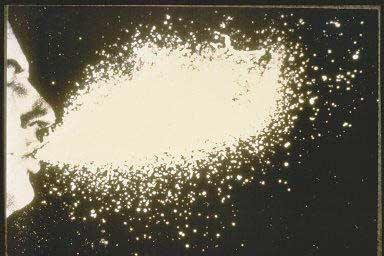
So how do these germs get there? Usually what
happens is that either people use their hands to wipe away mucus
or they pick their nose (ew!), or they sneeze and cough --
either right into the air (like in the picture) or into their
hands, which they then use to push shopping carts, open doors,
pick up toys, or whatever else.
Other ways that germs get spread
include touching dirty Band-Aids and used tissues (please put
them both in the garbage). And spoiled or raw food, or
unwashed fruits and vegetables, can also be a source of germs. |
|
 |

To avoid
spreading or picking up disease causing germs get in the habit of
washing your hands everyday, several times a day. Obviously, you
should wash your hands whenever they are dirty. But in particular, here are a
few specific times when family members should wash their hands.
|
When to wash:
·
before eating, drinking, or snacking
·
after using the toilet
·
after playing outdoors
·
after coughing, sneezing, or blowing their noses
· after
touching a cut or open sore
· after
touching or cleaning up anything yucky like: rotten food, pet "accidents",
dirty diapers, used tissues, etc.
|
|
 The
American Society of Microbiology finds that up to
one-third of people passing through major airports in
the United States don't wash their hands after using the
toilet. The
American Society of Microbiology finds that up to
one-third of people passing through major airports in
the United States don't wash their hands after using the
toilet.
The U.S. Centers for Disease Control and Prevention
(CDC) also estimates that about one in three people
don't wash their hands after using the restroom --
Mayo
Clinic
|
|
|
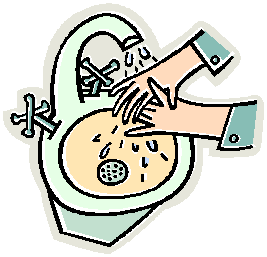
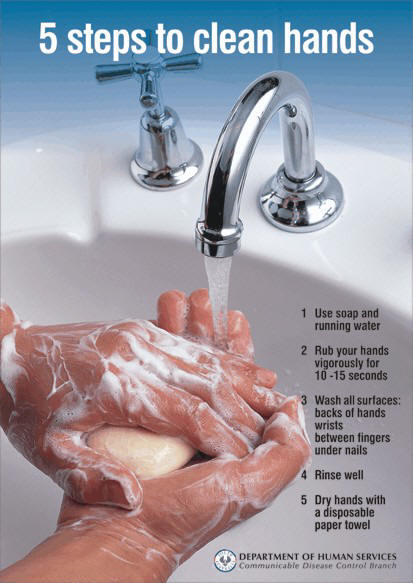
How to wash
Learn to keep hands clean by practicing these
four simple steps:
·
wet hands with warm running water
·
add soap to hands making a soapy lather for 20 seconds (sing a
song) and wash the fronts and backs of hands, wrists, between fingers, and under
the fingernails
·
rinse hands with warm running water
·
dry hands thoroughly with a clean towel
Don't Miss:
Soapy Experiments,
Bubble Fun,
Make
Your own Soap,
Coloring, and the
History of Soap. |