Books


Links  


Lesson Plans  


Food Webs 


What's For Dinner?


Science Equipment & Educational Toys


Saving The Environment


"We must all see ourselves as part of this Earth, not as an enemy from the outside who tries to impose his will on it.

...Being a living part of the Earth, we cannot harm any part of her without also harming ourselves."

-- Lame Deer,
Native American


Welcome to the Earth's Kids Environmental Science page!  This is the place to learn more about our environment and it's various habitats.  This is also where you can learn how to take action to make the world a better place for all the creatures we share this Earth with!

When the first astronauts traveled out into space they were struck by an amazing vision:  planet Earth, sitting like a blue and green jewel in the blackness of space.  An extraordinary place of life, and the only planet we know of that definitely has life, and in such abundance.  And the more scientists learn about life on Earth, the more they realize that Earth is wrapped in a delicate web of environmental systems that connect, each to the other.  Food webs, climate cycles, ocean currents, animal migrations, carbon/oxygen exchange and so on.

We are now aware that changes in any one of these systems can have a huge impact. 

Similarly, other changes underway, such as human beings cutting down forests to harvest wood and clear new farmland destroys wild animal habitats, and in many cases the animals themselves.  It even drives many native peoples from the land.  It often creates top soil erosion and destroys the forest watershed that provides clean drinking water to cities downstream.  And it slows the exchange of carbon dioxide into oxygen.  Which in turn causes global temperatures to rise. 

Too much carbon dioxide leads to temperature changes... which leads to krill die offs in the ocean.. which leads to the decline of fish populations that feed on krill...which leads to the ocean birds and mammals (penguins, whales, seals, etc.) that feed on fish struggling for food -- competing even more with human beings who are also finding the supply of fish dropping to dangerous lows.  So low that not enough baby fish will be born and grow to maturity to supply the creatures that depend on them.

Scientists worry too that if all these systems get too off balance, nature may not be able to set things right again -- ever.  Hopefully that wouldn't be the case.  Certainly planet Earth has been through some pretty major changes over the millenniums and although many species of creatures have become extinct, life on Earth has continued on, in some form or another.  And new species always develop and multiply.  So far at least.  But as scientists look to some of the other worlds in our solar system, including moons of some of the larger planets, they wonder:  did life thrive there once upon a time... until some terrible change or error happened that threw the delicate balance too far off?  Could this happen to our own planet?  Could we make this happen through careless harm to nature?

Even if changes that catastrophic could not happen-- that is, even if we could trust Earth to always find her balance again -- we know now that big enough changes are underway on our planet right now that we humans have to change our ways of doing things... if we don't want to be one of those species that goes extinct.  Or, at the very least, if we want to cope effectively with the changes in weather patterns, crop growth, rainfall, pollution levels, global warming, and the depletion of our fisheries.  So that we have enough food and water, clean air to breathe, and safe places to live.


But if it all seems overwhelming, consider this:  right now we have more technological know how than we have ever had before.  And we have more ability for scientists, inventors, activists, and world leaders to communicate with one another, all over the world, than ever before.  We are able to spread the word about problems, share ideas, work together, pressure our leaders for change more effectively than any other generation in history.

Yes, the problem is big.   But the group we have assembled to work on it is big too.  And guess what?  YOU are part of that group.  You, your friends and family, even your teachers and kids at school.  So do your part.  Learn.  Spread the word.  Email your government leaders.  Share your ideas and your concerns.  Together we can make it happen.  One step at a time.


 Below you'll find more Earth's Kids pages to help you learn more about nature and to help you take action for the environment

Be sure to surf the rest of this page for our Enviro Links-- as well as lesson plans and an offering of books and science equipment to help you learn more about the environment and the delicate relationships between living creatures and their habitats.

Learn more about...


  •  Oceans & Marine Life (including fish, whales, coral reefs, seals, dolphins and other creatures) and what you can do to help.


  • Global Warming -- what's going on, and what we can all do.  Learn more about this critical environmental issue.  Contains a summary, recent news, common myths and how to debunk them, useful articles, plus links for teachers, kids, and anyone else willing to learn more.  Find out how to email the President!


Links

Great groups to join or donate too -- or just surf their sites to get more information about topics of interest to you


The Endangered Species Program
Sponsored by the US Fish & Wildlife Service

This is the place to get the straight skinny on just what qualifies an animal to be on the endangered species list, which animals are already on the list, and what is being done to help them.  Great source for news about the challenges and progress going on in the Fish & Wildlife Service.  (Note these are the folks in charge of our nature preserves! Home of the Blue Goose mascot. Happy first Centennial to the National Wildlife Refuge System!)

Be sure to check out their Kid's Corner for fun wildlife information plus ideas on what kids can do to help.   Information for Teachers too.

As a side note, did you know you can even volunteer your time at your local wildlife preserve?  If they don't have any other jobs open right now, I'll bet they can always use help getting their newsletters and other materials folded and mailed. (One Earth's Kids junior staff member volunteers her time with the Fish & Wildlife Service on a regular basis.  They are nice people and helping them help the animals always puts a smile on her face.)


National Wildlife Federation

The quickest way to take action for the environment.  This site features news in the world of wildlife conservation and environmental issues, and highlights specific actions you can take -- right now -- to help with wetlands preservation, ending government funded harm to the environment, and urging government to take positive action on behalf of wildlife.  Be sure to check out their cool stuff for kids including their excellent action tips.  (Be sure to check out Green Home.


World Wildlife Fund for Nature

Another top level site with news about events going on around the globe that impact the future of our natural world.  It also features great information on how you can help -- through campaigns, wise shopping, donations, and educating others.  And if you needed one more reason to visit their site, their url is www.panda.org!


Earth Savers
Sponsored by the National Wildlife Federation

This web page has info about the Earth Savers kid's club, sponsored by the National Wildlife Federation. Read the Earth Savers newsletter (there's even a back issues archive), learn how to start and lead your own local Earth Savers chapter, and find out about the Habitat Helpers program, a program started in 1995 to encourage kids to improve their local wildlife habitats. Maybe you could become a famous Earth Saver, with your picture featured on their web page! Find out how, or just find out how to help. They even have great tips on how to raise money to finance your club's habitat work.


Kids F.A.C.E.

The Kids For A Clean Environment homepage. Learn all about this take-action environmental group that was started by a 9 year old girl.... and now numbers more than 300,000 members! Fill out the on-line membership application and receive information about what YOU can do. While your there, you can read the latest Kids F.A.C.E. News.


Roots & Shoots
Sponsored by the Jane Goodall institute

The mission of this program is "to foster respect and compassion for all living things, to promote understanding of all cultures and beliefs and to inspire each individual to take action to make the world a better place for the environment, animals and the human community. All Roots & Shoots members, from pre-K to university, demonstrate their care and concern for living things through service projects in their communities."

For more information about how you can get involved, visit their web page, read up on what Roots & Shoots are doing in your area or how you can help start a local chapter yourself. There are also ideas for things that you can do all on your own such as to grown native plants, build bird houses, and pick up trash.


Defend It!

Great ideas for helping wildlife!  Learn about writing letters, fundraising and more!  From Defenders of Wildlife.   Be sure to visit their Wild Life Action Center for important news and current actions and campaigns!


Help Donate A Tree

Through  Heifer International you can actually help people around the world stop and even reverse deforestation by donating money for HI to give them trees and seedlings.


Tree People

Find out how one caring, determined kid decided to stop the destruction of trees caused by Los Angeles pollution. The organization he began, now called Tree People, has planted over 2 million tree in Southern California.  Find out how you can help!


TOP


 Changing Food Webs


In any ecosystem, there are many different life forms that depend on each other.   For example, in a forest, the deer and the rabbits eat the grasses and other plants (which depend on water, sunlight, good soil).  Wolves or other large predators prey upon the deer and rabbits.  And scavenger animals and certain insects feed upon the remains. 

Meanwhile the plants depend on the predators to keep the number of plant eating animals from growing too large (and thereby eating up the plant material faster than it can grow and replace itself).  The droppings (poop) of both predators and plant eaters nourish the soil on which the plants depend.  And the urine of of these animals is a source of important nutrients for certain insects, such as butterflies.

When we disrupt an ecosystem (forest, pond, grasslands, desert, ocean, etc.), we disrupt the food webs that various creatures depend on to live.  Pollution, habitat destruction (cutting down trees, building houses, etc.), and over-fishing are all examples of actions that disrupt ecosystems and food webs.  The results of such disruption can be extinction -- amazing plants and animals disappear.   When they go, they take part of the wonder and majesty of our world with them.  The complexity and beauty of Earth is diminished.

We have no way of knowing how much diversity can be eliminated (how many kinds of creatures can be destroyed) before the living world is in danger of disappearing forever.

But scientists do know that there have been times when great changes have occurred upon the Earth that have led to the destruction of the most dominant species (those animals that seemed most important and great in number at that time).  The end of the Age of Dinosaurs was only one example of this cataclysmic destruction!  There have actually been many others!

So we must wonder, if there had not been any tiny shrew like creatures at the end of the Dinosaur Age, what would the Earth be like today?  This is an important question because scientists also tell us that it was from these small creatures that all the mammals alive on Earth today evolved -- including human beings!

What would the world be like today, if these small creatures had already gone extinct -- before the dinosaurs died out?

What small creatures exist today, that could some day change the entire future of life on Earth?  


Food Web Links


The Web of Life

A great online illustrated story for kids.  Read one page at a time -- remember to click the "Next" at the top of each page to read the next story.


Antarctic Whales -- Food Chain

Baleen whales, leopard seals, penguins, phytoplankton -- see how it all fits together.


Food Chains & Webs

Take a look at the energy pyramid.  See how food chains work in different biomes.  Plus... create your own food web!


Chain Reaction

Play the food chain game!  Learn about bioaccumulation.


The Living Sea -- Predator and Prey

A fun activity to help kids see the connections that make up an ocean food web.


TOP


Read more about food webs!

To read more about food webs, check out this incredible..

 Click here for great food web info!

List of Food Web Links


What's For Dinner?
About Eating Low On The Food Chain...

 Always remember that deciding what to eat is a very personal matter -- one that you should talk over with your family and your family's doctor.  This is because taking care of your body is a very important responsibility -- one you will have for the rest of your life! 

But there is another body that supports us all as we go through life, and that is the Earth herself.  Because we want the Earth to be in good health, able to support us, it's important to think about how what we eat affects the environment of the Earth. 

Currently, most of us with access to a computer also have access to a lot of meat.  If you study food webs or food chains, you already know that eating meat is eating high on the food web energy system.   In short, each animal we eat must itself eat a LOT of plant food to create and maintain the flesh that we eat as burgers, meat balls, hot dogs, lunch meat, and etc.  

The Problem

You might be surprised to learn that, on modern factory farms, these "food" animals are actually being fed (plant) food that could be fed to humans.  Lots of grain like corn and wheat as well as legumes (like soy beans) are fed to cows, pigs, and chickens.   This is food that could have fed human beings -- a lot of them! 

In fact, a lot more human beings could be well fed if we just fed the grain and legumes to humans -- instead of first feeding it to animals and then eating the animals.  This is because each animal burns up a lot of the food energy in the grain and legumes (to fuel it's movement, breathing, and other life processes) before turning some of it into the meat that gets eaten.

In addition most people in the world can't even afford to buy this meat.  Meat simply costs more money than plant food.  This is because it costs a lot of money to feed, house, and care for the animal for the year or two before it is "harvested" for food.  All this expense, plus the farmer or rancher's own need to earn a living, adds up to a big price tag.  A price tag that many poor people, especially in third world countries, cannot afford.

Unfortunately, when a lot of plant food that could be eaten by humans is fed to animals, that plant food becomes more scarce and more valuable, and therefore more expensive!  This means that plant food too becomes harder to afford.  Which translates into hungry people.

 (Learn more about the causes of world hunger and what can be done about it.)

The solution

Now don't worry, no one's suggesting we starve the animals!  Naturally we must continue to feed those animals we already have.  However, if we could stop raising more and more animals every year -- and feeding more and more of the grain and legumes to them --  and instead feed the tons of extra corn, soy beans, and other foods to human beings.

We wouldn't even have to stop eating meat all together -- just cut back.   This way, the plant food that the Earth can provide will go farther and be more easily capable of feeding all the children of the world.   This means that poor children, in the U.S. and in other lands, will never face a time when there is not enough grain or beans to go around.

What's more, it means that  right now  people could stop burning down the rainforest to create new pastures to raise more and more herds of cattle (to provide more and more hamburgers and pot roasts).  And leave the habitat intact for those animals who already live there.

Furthermore, if we did not need to grown so much extra food each year, to feed to growing numbers of farm animals, it would save our soil.  Soil can actually get used up -- or more exactly, the minerals and other nutrients that plants depend on can get used up.  This makes it so that plants do not grow, or if they do grow, they don't produce very large fruits, vegetables, or grain seeds.

For this reason, many farmers feel they have to use chemicals in order to get their plants to grow and to produce a big harvest.  This would be fine except many of these chemical fertilizers produce harmful waste products. 

Conclusion

Clearly, over-using the soil can lead to serious problems.  Limiting the amount of food crops we must grow each year (by needing to feed fewer animals destined for the dinner table), means that...

  • Less of our existing farm land will become depleted due to over-use, making it able to continue being used for many generations to come.


  • Fewer harmful waste products (from fertilizers used on depleted land) will be seeping into our ground and water, poisoning wild life and people.


  • Less natural habitat must be destroyed to create new farm land.


  • Fewer wild animals will become extinct due to habitat destruction.


  • Nutritious plant food will be more available for human consumption, making it easier for the world's poor and starving to be fed.

By having more of our meals plant-food-based, rather than meat-based, each of us can do our part to limit damage to our farmlands, halt the destruction of natural habitats and the extinction of wildlife species, and to defuse food scarcity issues that help fuel world hunger.

Just by changing what we eat for dinner, we can have a profound impact on the environment.


Afterword...

Thank you for taking the time to read this article!  We hope you'll think over what's been said here, gather more information, and talk it over with people you know. 

Remember that each of us has the responsibility to educate ourselves and to use our best judgment.  This applies not only to saving the environment however, but to taking care of our own bodies.

Please do not make a change to your diet (such as reducing or eliminating meat consumption) without first learning how to get all the protein and nutrients you need from plant food sources!

TOP


         Order from our affiliate, Amazon.com, or visit your local library!     


Saving
The Environment


Giving Service
 In Your Community


Stopping
 Global Warming


Ending World Hunger


Helping Animals
 

Working For
 World Peace


Ending Poverty


Use the Power of Information


Taking a Stand Against
Prejudice & Discrimination


Taking A Spiritual
 Approach To Life


Nurturing A Positive Attitude


Learning...
About Yourself, Your World,
&
What You Can Do


 Order from Amazon.com

I Want to Be an Environmentalist


Your Big Backyard


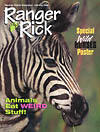
Ranger Rick


Banner 10000039


Banner 10000090


Science Equipment


An offering of select materials to enhance your enjoyment and understanding of nature
 

 Shop Now at eToys


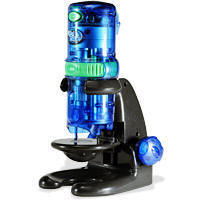
QX3 Microscope

Forget peering through a tiny little eyepiece -- the QX3 shows you the image right on your computer screen.  Imagine a huge full color image and the capacity to take still photo shots and movies. 

You can even modify your captured images to make a fun animated short film complete with sound bytes. 

Hook this baby to your laptop computer and turn your next homeschool fieldtrip into an outdoor science lab excursion.

You can take the microscope off its cradle stand to scan the surface of large items-- or to scan fixed objects and organisms.  Look at tree bark up close or examine a spider web without ever having to disturb or destroy a thing.

Available from eToys


Educational Toys & Science Equipment available from Edmund Scientifics
 

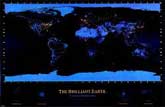
The Brilliant Earth Poster

 
In this nocturnal satellite map, heavily populated areas are evident due to electric lighting in buildings and other structures.

Invite friends to locate New York City and other major cities around the world. -- The Brilliant Earth makes an interesting statement about the impact of man on earth. 36" x 24". Laminated


Edmund Scientifics Illuminated 30X Pocket Microscope

Pocket Microscope
measures 5" long x 1" wide. Powered by two “AA” batteries (not included). Features a clear acrylic base, on/off switch and side focus knob.   Specifications: Magnification: 30X  
$10.95


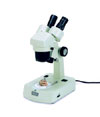
20x/40x Stereomicroscope

Stereomicroscope
For serious students of the environment.


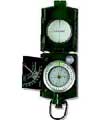
Multifunction Digital Compass

Multifunction Digital Compass


An excellent quality compass. -- Liquid-filled with bubble level, clinometer, map scales, carrying case, and multi-language instruction manual. -- Dial has 5 degree (0-360) gradations, compass disc has 2 degree gradations. Hairline guide is on a gradated reticle. Compass has a mounting bracket for tripod use


Liquid-Filled Compass From Silva

Liquid Filled Compass


Butterfly Pavilion

Butterfly Pavilion
comes with butterfly fact book and coupon for 10 free "painted lady" caterpillars and special growth food.  For ages 4+ $29.95


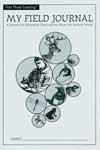
Field Journal
Attractive, well-made, soft-cover book specifically designed for children. Carefully organized into sections for note writing and sketches using prompts that help young journalists record their impressions, discoveries, thoughts, ideas and questions regarding the world of nature.


AntWorks - Space Age Ant Habitat

Space Age Ant Habitat
Kids can watch ants create 3D tunnels! Now available at
ScientificsOnline.com!

Supersonic™ Ear II Electronic Listening Device

Supersonic Ear
Electronic listening device makes it possible to listen in on wildlife, in the backyard and on hikes.


Smithsonian Complete Weather Station

Smithsonian Complete Weather Station
Includes a anemometer to measure wind speed, a wind vane for determining wind direction, indoor and outdoor thermometers, a rain gauge to chart rainfall, a data log pad to jot down research notes, a full color cloud chart, instruction manual and more.


Energy From The Sun Kit

Using a blank silicon slab and the other materials provided in this kit, you will build a working solar cell. -- The kit then shows you how to use the solar cell to drive a pendulum, a small motor and a radio.

In addition, the kit gives marvelous insight into the usefulness of solar cells. -- Includes: a comprehensive manual and introduction to solar energy written by one of the co-inventors of the solar battery, Dr. Darryl Chapin. -- (Please note: all materials required except heat-insulated bricks and asbestos sheets are included.)


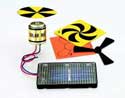
Solar Electricity Kit

Build a Solar Power Demonstrator! -- This kit consists of an encapsulated solar cell array, a miniature motor, a wind propeller, an optical illusion disc, and an instruction manual.

With these components and the included instructions, you can study the impact of artificial light versus sunlight and learn the basic principles of solar cell energy generation.


Lesson Plans

Teaching About Ecology
with The Magic School Bus

Planet Earth 
 

Oil Slick


Transboundary Pollution
 

The Earth's Treasures


You Make A Difference
 

Keeping Our
Community Clean
(4-5 year olds)


How Animals Adapt
to their Environment


What Lives in the Water
(PreK-2)
 

Minibeasts

Cave Animals
 

Conflict Yellowstone Wolves
 

Ocean Creatures
& The Web of Life
 

Seed Travels
 

Discovering Science in Nature
(general ideas)
 

Activities for classrooms
by the National Wildlife Federation
 

Lesson Plans Related
To The Environment


What Makes Up An Ecosystem
(Reproducible)

Earth Saving Scavenger Hunt
(Reproducible)


Earth Day, Every Day Unit Study


Earth Day, Every Day Unit Study


TOP


Banner 10000067


More EK Science
Pages:


Dinosaurs -- Great info, links, books, and educational toys about these favorite prehistoric creatures.
 

E.K. Science -- Lots of links, books, and equipment to help kids learn astronomy, physics, chemistry, and more.
 

Your Body -- Learn how your body works, and how to keep it healthy!
 

Grow A Garden -- Learn important principles in Earth Science by preparing the soil, sprouting seeds, growing plants to bloom or fruition, and coping with pests.
 

Oceans & Marine Life


Wild Animals   -- E.K. Zoological Science
 

Science News -- Today's top science headlines and news, plus online science magazines.


Science Pages By EK Kids:

Michelle's Animal Facts

Gabbi's Bug World  

Volcanoes!


 Solar energy products at Scientificsonline


Check out our  great  Earth's Kids    Math  and   Science   Learning Pages!
 

Don't miss Earth's Kids   Summer and     Ocean Science     pages

for science and craft activities, reading and more!

 Every day is  EARTH DAY!  Check out our great fun activities, art, & learning about ways to help grown ups and kids help our Earth!

Wondering about the weather?  Don't miss the Earth's Kids special feature on  Global Warming!


Click Here to Tell Congress to pass the Safe Climate Act!


Plant a Tree with the Conservation Fund


  DisneyShopping


Up | Information | Global Warming | Poverty | Environment | H.P. Power | Help the Animals | Attitude | Hunger | Prejudice | Peace

 Copyright Earth's Kids 2003.  All rights reserved.